

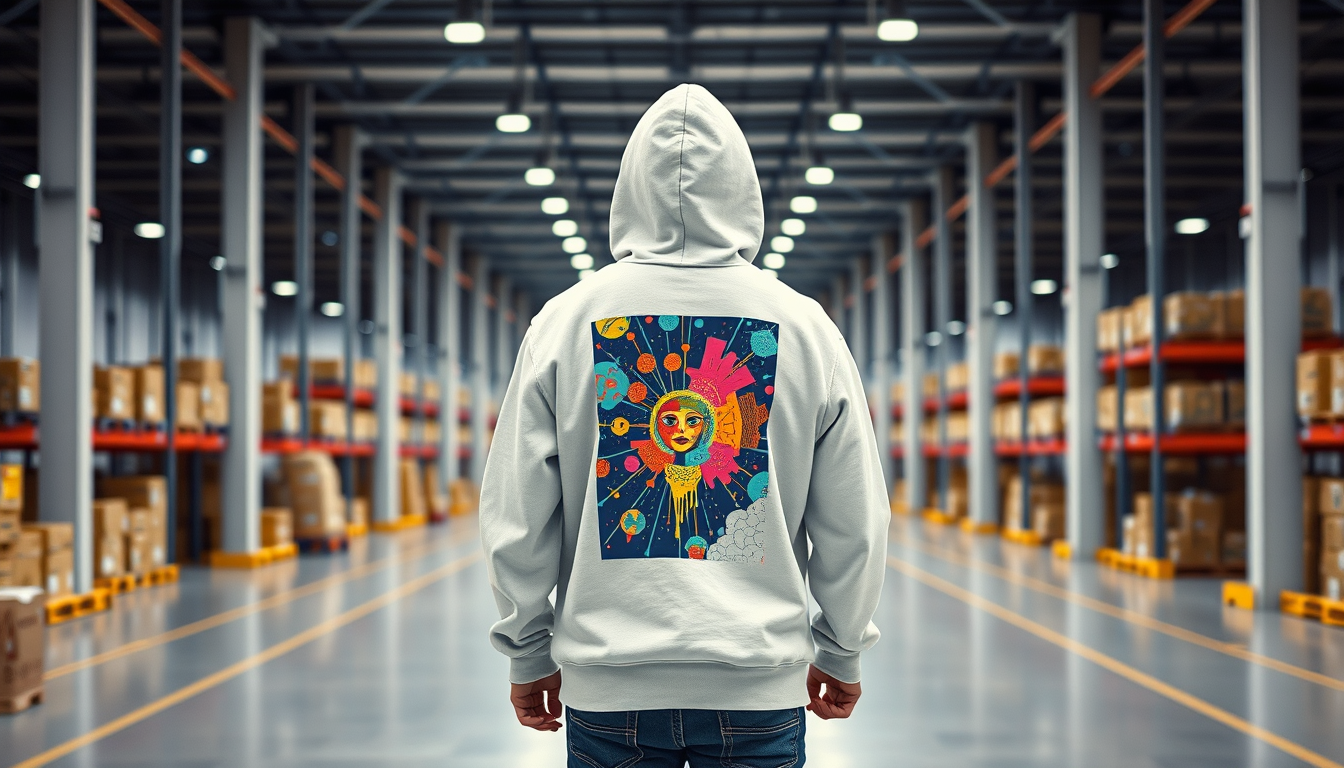
“A new feature in the Amazon Shopping app allows users to generate designs with Alexa, then print them on products like T-shirts, hoodies, and tumblers.”
This is the logical conclusion of the “AI everything” era: turning a voice assistant into a mediocre graphic designer for people who find Canva too taxing. It is the ultimate convenience play—the kind of feature that sounds useful in a boardroom presentation but feels slightly absurd when you actually imagine the user experience.
Generate designs with Alexa
The technical lift here is negligible. We aren’t looking at some new architectural breakthrough in latent diffusion. This is almost certainly a thin wrapper around an existing image generation model (which probably just hits a Stable Diffusion endpoint) hooked up to the Alexa voice interface. The “innovation” isn’t the AI; it’s the pipeline. Amazon has simply connected the prompt box to the fulfillment center.
Who, exactly, is the target audience here? The professional designer isn’t going to describe a complex vector layout to a voice assistant. The casual shopper, meanwhile, is now invited to create “art” without needing a shred of artistic intent. It is the AI equivalent of those “design your own” pizza kiosks at the mall—convenient for five minutes, until you realize the result is a soggy mess.
There is also the inevitable friction of the interface. Trying to describe a visually specific composition via voice is a nightmare. You’ll spend ten minutes arguing with Alexa about whether the “cyberpunk cat” should be wearing sunglasses or goggles, only to realize that the latency between the prompt and the preview makes the whole process feel like waiting for a dial-up modem in 1996. (I suspect the “preview” images are heavily compressed to hide the artifacts).
It’s a prompt-to-print pipeline for the unimaginative.
Print them on products
The real story isn’t the generation; it’s the monetization of the “everyone is a prompt engineer” phase. By integrating this into the Amazon Shopping app, Amazon is essentially turning its marketplace into a low-effort version of Etsy. They are removing the middleman—the human artist—and replacing them with a GPU cluster that doesn’t ask for royalties.
But this creates a massive legal vacuum. When a user tells Alexa to “make a shirt that looks like a vintage Star Wars poster but with my dog,” who is responsible for the copyright infringement? Amazon is betting that the sheer volume of these custom orders will hide the individual thefts in a sea of noise. Or maybe not—see below.
The quality of these prints will likely be abysmal. Generating a 512×512 image is one thing; scaling that up to a high-resolution print for a hoodie without it looking like a blurry watercolor painting is another. Unless Amazon is running a heavy-duty upscaler in the background (which adds more cost and latency), the physical products will look exactly like the prompts they came from: generic and slightly off.
By the end of Q4, we will see the first major class-action suit targeting Amazon for facilitating the mass production of copyright-infringing AI apparel.
The move is strategically sound for Amazon’s bottom line because it increases the “stickiness” of the app and opens a new revenue stream from people who want to feel like creators without doing any of the work. But for the rest of us, it’s just more noise in an already crowded feed of AI-generated clutter. It is the final step in the commoditization of creativity, where the distance between a random thought and a physical object is reduced to a few seconds of voice processing.








Leave a Reply