

Do we really need another benchmark for agents that pretend to use computers? Yes, but only if we are tired of benchmarks that are basically just “can you click this specific HTML button in a headless browser.” The problem with most current evaluations is that they happen in a vacuum—controlled, sanitized environments where everything is predictable and the DOM is laid bare. [MacArena](https://arxiv.org/abs/2606.06560) tries to change that by throwing agents into a live macOS environment, which is exactly where the real friction lives.
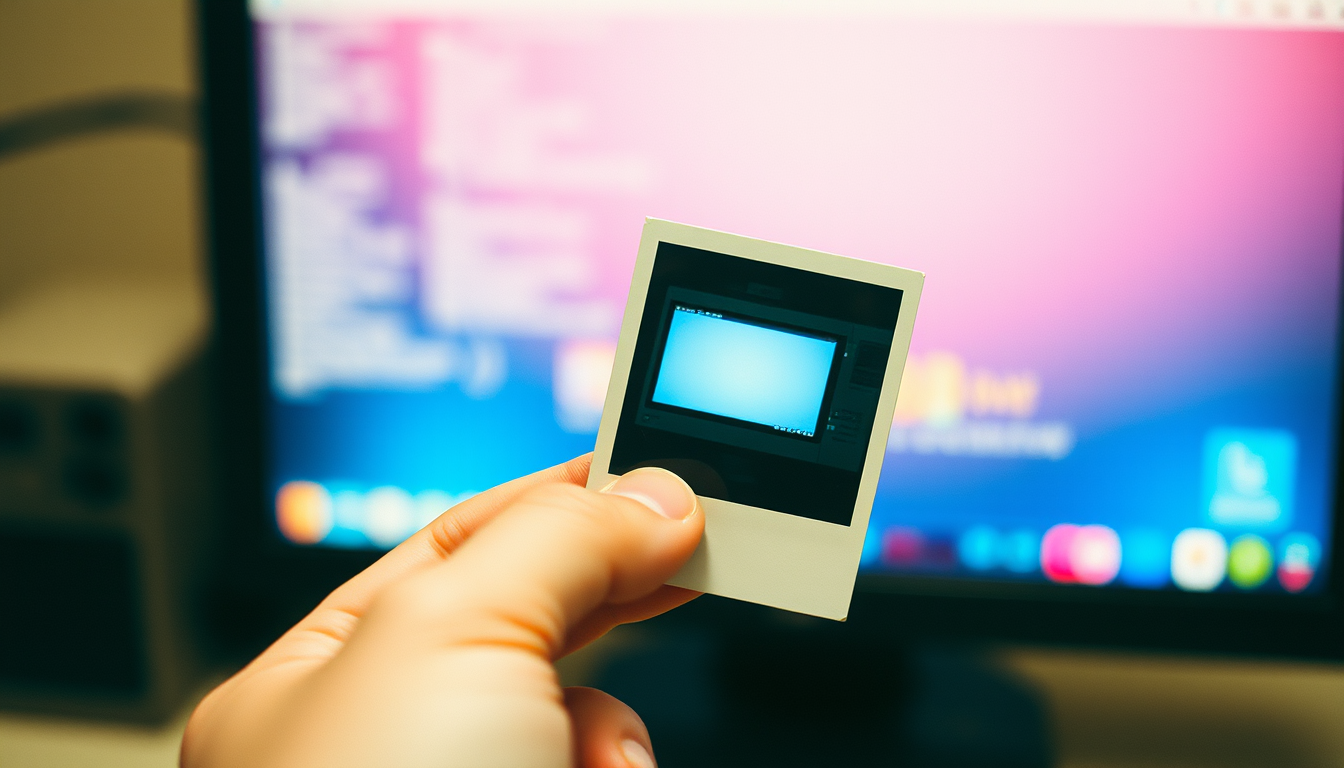
The core issue is that operating a GUI isn’t just about vision; it’s about state management and timing. Most computer-use agents today are just guessing based on a static screenshot. It is like trying to fly a plane by looking at a polaroid taken every five seconds. You might be okay on a straight path, but the moment you hit a turbulence of pop-ups, a permission dialog, or a window that refuses to focus, the whole thing falls apart. MacArena exposes this gap by forcing agents to deal with the actual idiosyncrasies of macOS, rather than a simulated API that behaves perfectly every time. If an agent cannot handle a window being partially obscured by a notification, it is not “using a computer”—it is just performing a scripted dance in a very small room.
Let’s be honest about the current state of “computer use.” We’ve all seen the demos—smooth, edited videos of agents booking flights or organizing folders with surgical precision. Then you try to implement it yourself and realize the latency is agonizing. Waiting for a VLM to process a 1080p screenshot, send it to a cloud endpoint, and return coordinates is a special kind of torture. Even with the fastest inference, the round-trip time makes the experience feel like using a dial-up modem in 1996. Do we actually believe a loop that slow can ever feel native to a human user? We are essentially building a remote-control service that takes five seconds to decide to move the mouse two pixels to the left.
The research in MacArena is a necessary slap in the face. It proves that “general intelligence” does not automatically translate to “knowing how to maneuver through the System Settings menu.” There is a massive difference between reasoning about a Python script and figuring out why a specific macOS window is hiding behind another. (I suspect most of these agents are just hallucinating the coordinates of the ‘Close’ button half the time). It is the difference between reading a cookbook and actually trying to flip a pancake without making a mess of the entire kitchen. One is a theoretical exercise; the other requires a physical understanding of how things actually move and react in real-time.
The real battle isn’t going to be won by better benchmarks, but by tighter integration. The current approach—screenshot, send to cloud, get coordinates, move mouse—is a dead end. It is too slow and too brittle to ever be a viable product. We need a direct line from the OS kernel to the model’s latent space, where the agent doesn’t “see” a picture of a button but interacts with the object itself. Until then, we are just polishing a very slow mirror. I bet we’ll see a dedicated, locally-run “OS-native” model from a major lab by Q4 that bypasses the screenshot loop entirely to reduce latency.
Most of these papers end with a hopeful note about the potential for autonomous assistants. But the reality is that the distance between a benchmark score and a product you would actually pay for is a canyon. MacArena provides the map of that canyon, but it doesn’t build the bridge. It simply proves that our current agents are far more fragile than the marketing slides suggest. We are essentially benchmarking the ability of a model to guess where a button is, which is a far cry from actually having a digital assistant.
It’s a start, but it’s a cold one.









Leave a Reply