
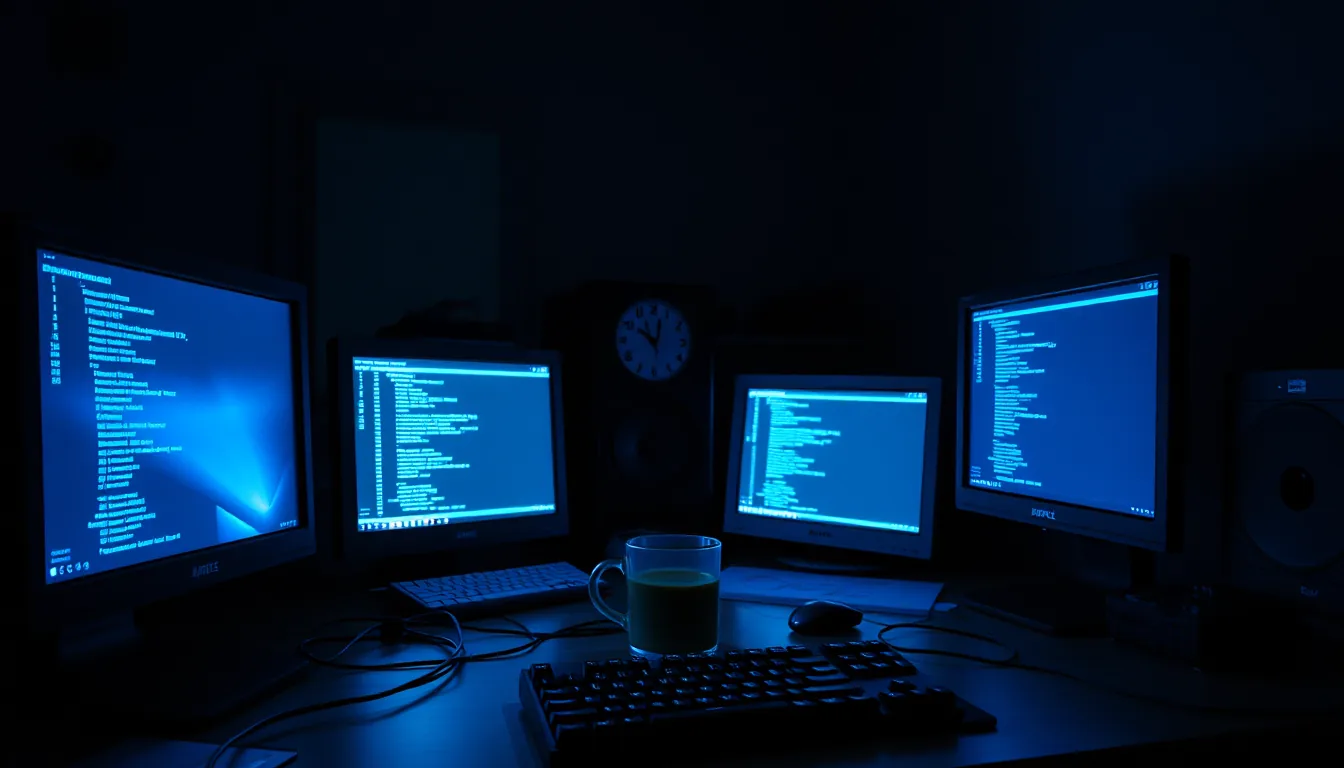
It is 3:14 AM. A developer is hunched over a mechanical keyboard, the blue light of a terminal reflecting in their glasses, staring at a wget progress bar that has stalled at 42%. There is a lukewarm cup of coffee nearby and a deep, itching desire to see if the latest weights from Alibaba actually handle complex tool-calling without hallucinating a fake API endpoint. This is the ritual of the local-model enthusiast: waiting for the download, praying the quantization doesn’t kill the logic, and hoping the VRAM doesn’t scream.
The wait just got a bit more complicated with the announcement of Qwen3.7-Plus. On the surface, it is a multimodal powerhouse integrated into the Bailian platform, boasting vision, deep reasoning, and “autonomous iteration.” For the corporate crowd, this is a productivity win. For those of us running models on our own silicon, the “Plus” designation usually signals a VRAM nightmare. If this follows the trajectory of previous Qwen “Plus” iterations, we aren’t looking at something that slides neatly into a single RTX 4090. To run this comfortably without excruciating latency, you are likely looking at a dual 3090/4090 setup or a Mac M3/M4 Ultra with enough unified memory to swallow the weights whole. We are waiting for the GGUF or EXL2 quants to hit Hugging Face, but even then, a Q4_K_M quantization of a model this size will likely push the memory floor past 40GB.
The industry is currently obsessed with “deep reasoning” and “autonomous iteration,” but let’s be honest about what that actually means. It is essentially a loop where the model generates a draft, critiques it, and fixes it before showing it to the user. It is like a chef who tastes a sauce, realizes it is bland, adds salt, tastes it again, and repeats the process until it is edible. Why do we keep pretending that this is a new discovery and not just a sophisticated loop with a stop condition? While the capability is useful, it is a feature of the inference pipeline as much as the model itself. When you compare it to Llama 3.3 or Gemma 3, the Qwen series usually wins on raw coding and math benchmarks, but the “reasoning” gap is narrowing. The real test is whether these “autonomous” iterations actually solve the problem or just spend ten seconds of compute to arrive at the same wrong answer more confidently.
Then there is the license. Alibaba has a habit of using custom restrictive licenses that look like open-weights from a distance but feel like a gated community once you try to scale commercially (probably because their legal team is terrified of US sanctions). If Qwen3.7-Plus sticks to a restrictive license rather than Apache 2.0, it effectively cedes the “industry standard” crown to Llama. Developers don’t want to hire a lawyer just to deploy a local agent for their internal documentation. The friction of a non-standard license is often a bigger bottleneck than the actual GPU requirements.
If you are trying to figure out if this fits on your rig, the answer is likely “not yet” for the full-fat version. You might squeeze a heavily quantized version into 24GB of VRAM using something like llama.cpp or Ollama, but expect the tokens per second to crater the moment the “deep reasoning” kicks in. The overhead of autonomous iteration means you aren’t just paying for the final output; you are paying for the three failed attempts the model made in the background.
It is a powerful tool, but it is not a miracle.
By Q3, we will see a distilled “Small” version of the 3.7-Plus reasoning engine that fits comfortably in 24GB of VRAM without sacrificing the tool-calling accuracy. Until then, the “Plus” is mostly a flex for those with H100 clusters and enterprise API budgets.