
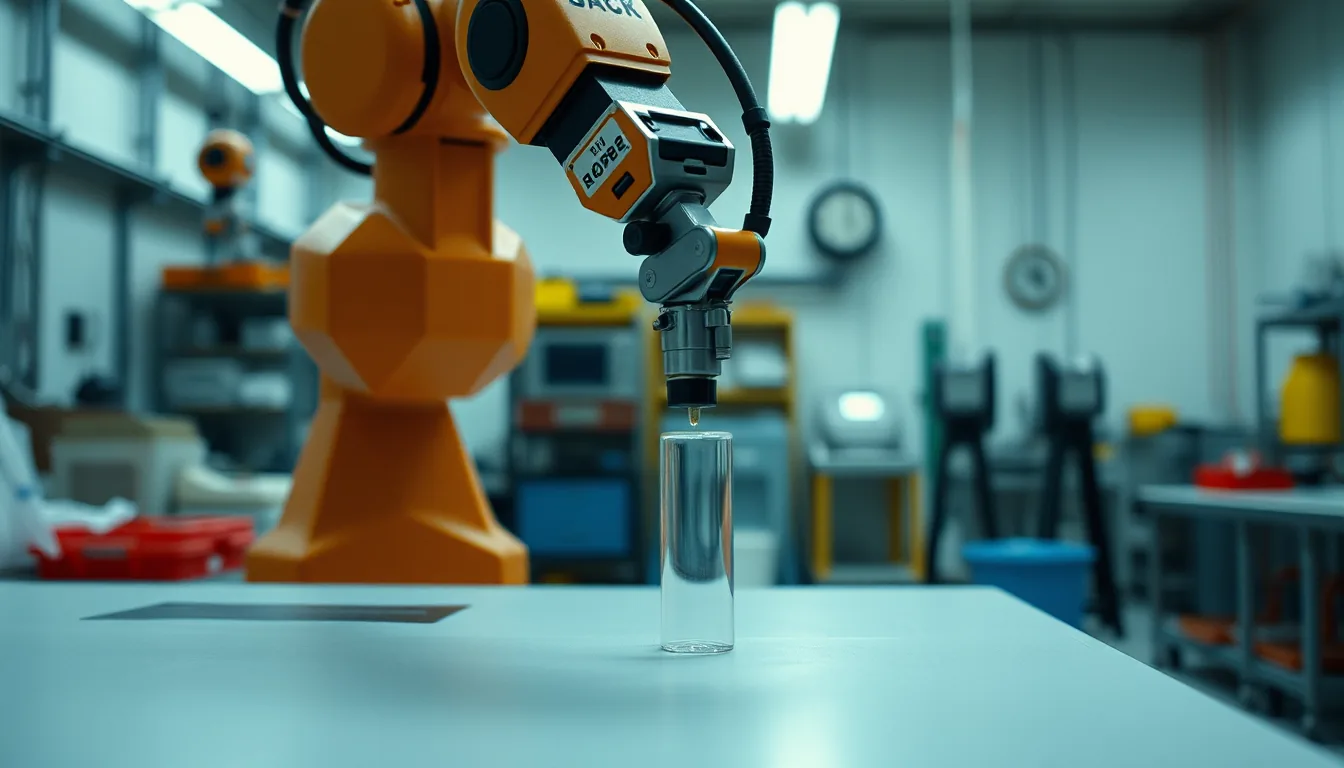
Zero. That is the number of pre-existing video generators Ant Group used as a base for LingBot-VA 2.0.
For the last eighteen months, the trend in embodied AI has been lazy. Most labs simply take a high-end video generation model, slap a control layer on top, and pretend they’ve created a robot brain. They are essentially trying to teach a machine to move by showing it a thousand hours of YouTube clips and hoping the physics “emerge” through fine-tuning. It is the AI equivalent of trying to learn to play the piano by watching a movie of Liszt and then wondering why your fingers won’t move on their own.
Why do we keep pretending that a fancy video generator is a robot brain? A video model predicts pixels; a robot needs to predict causality. If the model thinks the next frame should show a glass tipping over, that’s a visual prediction. If the model knows that applying 2 Newtons of force at a specific angle causes the glass to tip, that is physical intelligence.
The LingBot-VA 2.0 technical report describes a causal video-action model built from the ground up for physical interaction. By avoiding the “fine-tune a video generator” shortcut, Robbyant is betting that a model designed for action will inherently understand the relationship between an observation and a result.
(I suspect the training costs were astronomical).
Building a foundation model from scratch for a specific modality is a risky move. It requires a massive amount of curated, high-quality robotic data—the kind of data that is notoriously hard to collect compared to the infinite scrapheap of the open internet. But the payoff is a model that doesn’t suffer from the “hallucinated physics” we see in standard video models. When a model is native to embodiment, it isn’t just guessing what the next frame looks like; it is calculating the trajectory of an action.
It’s the only way this actually works.
The most interesting part of the architecture is the “Foresight Reasoning” capability. The model doesn’t just react to the current frame; it predicts future states ahead of execution. It essentially runs a mental simulation of the move before the hardware actually commits to it.
This is the difference between a chef who has a mental map of the kitchen and a chef who is trying to follow a movie of someone else cooking in real-time. The former knows where the salt is before they reach for it; the latter is just reacting to visual cues. By combining this foresight with a system that re-grounds on every real observation, LingBot-VA 2.0 avoids the drift that usually kills long-horizon tasks. Most robots start a task perfectly and then slowly veer off into a wall because their internal state diverges from reality. Constant re-grounding is the corrective lens that keeps the robot on track.
Of course, there is the matter of real-world friction. Running a causal video-action model natively on a robot’s onboard compute usually means sacrificing frame rate for accuracy. Nobody likes a robot that stutters or pauses for two seconds of “thinking” while it’s trying to catch a falling object. If the inference latency is too high, all the foresight in the world won’t save the hardware from a clumsy mistake.
Still, the strategic move here is correct. The industry has spent too long treating robotics as a downstream application of LLMs and VLMs. By treating action as a primary modality rather than a side effect of vision, Ant Group is moving toward actual autonomy. By Q4, we will see the first set of benchmarks that proves native causal models have lower inference latency and higher precision than VLM-based controllers.