A no-look pass in basketball is a beautiful thing, provided the receiver is actually there. It is a calculated deception, a way to move the ball while pretending to look elsewhere, shifting the defender’s weight just long enough to create an opening. The trick isn’t the pass itself, but the misdirection that makes the pass possible.
Nolan is a man obsessed with the physical. He is the guy who blew up a real Boeing 747 for Tenet because he refuses to trust a digital simulation of a crash. To him, the entire AI pipeline isn’t just a shortcut; it is a fundamental rejection of the physical world. When a director spends years obsessing over the exact grain of 65mm film and the tactile friction of a physical set, the idea of a “generative” image is an insult. It is not about the image looking “real”—it is about the process of making it real. There is a specific, expensive kind of magic that happens when you have five hundred people on a soundstage trying to solve a problem in real-time. Replacing that with a prompt is not an efficiency gain; it is a subtraction of the human experience from the final product.
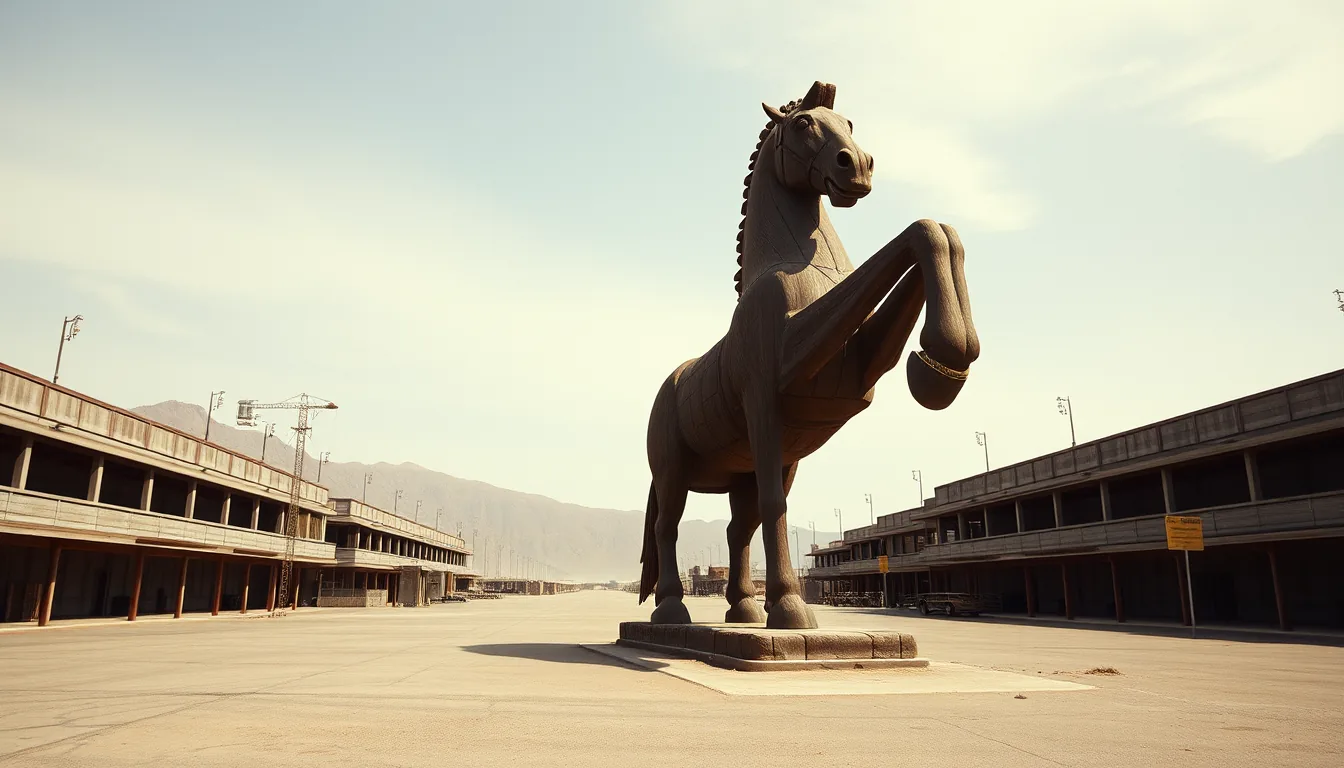
The “Trojan horse” comment—detailed in this TechCrunch piece—is where the actual argument lives. The misdirection here is the “democratization of creativity.” The industry sells AI as a way for everyone to be a filmmaker, but that is the shiny exterior of the horse. Inside are the corporate entities using that narrative to justify the mass ingestion of copyrighted works to build a closed-loop system. It is a classic bait-and-switch (the kind of plot twist he’d probably enjoy). By the time the artists realize they have been used to train their own replacements, the gates are already open. The “Greeks” are not here to help the indie creator; they are here to centralize the means of production into a few proprietary weights.
This brings up a question we rarely ask during the hype cycles: do we actually want a world where cinema is just a series of statistically probable pixels? The friction here isn’t just about “art” or “soul,” which are words that usually mean nothing in a boardroom. It is about the economics of the latent space. When a model can replicate the lighting of Oppenheimer without the cost of a massive crew or a physical set, the value isn’t being added; it is being extracted. The labs aren’t creating new aesthetics; they are averaging out existing ones. They are turning the history of cinema into a giant spreadsheet and selling the average back to us as “innovation.”
The industry has seen this movie before. There was a similar panic over CGI in the 90s, where people feared the “uncanny valley” would kill the actor. But this is a different beast because it removes the human from the loop entirely. However, the math doesn’t track for a long-term win. A movie is more than a collection of high-fidelity shots; it is a series of intentional, often idiosyncratic choices. By Q4 2026, the public will see a major studio release a fully AI-generated feature that fails miserably at the box office because it lacks a singular, human vision. (Or maybe not—perhaps the audience will have stopped caring about vision by then). The sheer cost of the H100 clusters required to render these “perfect” films will eventually clash with the reality of a bored audience.
Nolan is right about the horse, even if he is too focused on the craftsmanship to see the corporate ledger.
The Greeks are already in the city, and they brought a prompt window.