
“The search for dark matter has been blown wide open.”
About time. We’ve spent forty years building increasingly expensive holes in the ground and waiting for a particle to politely announce its presence. For the better part of a generation, the physics community has been obsessed with a specific ghost, and they’ve spent a fortune trying to catch it in a very specific kind of trap.
The problem with the previous approach was a lack of imagination. The community bet everything on one horse, and that horse didn’t show up. It’s a classic case ofConfirmation Bias on a cosmic scale. We didn’t have a theory that was wrong; we had a theory that was too narrow. It is a bit like trying to debug a production outage by staring at a single line of code for three years while the rest of the server is literally on fire. (Which is a polite way of saying we were blind).
The obsession centered on WIMPs, or weakly interacting massive particles. The idea was simple: find a particle that barely touches anything but has enough mass to warp the universe. But after decades of silence from the detectors, the narrative is finally shifting.
The real story here isn’t just that we’re looking for new particles; it’s that the way we look for them has changed. We are moving away from “build a bigger bucket and wait” toward a compute-first methodology. We’re seeing a shift toward high-fidelity simulations and AI-driven data analysis that can spot patterns in the noise that a human physicist would miss. The physics is lagging behind the compute.
Do we actually want to find dark matter, or do we just want the prestige of the discovery? The current pivot suggests the former. We’re finally admitting that the hardware traps failed and that the answer likely lies in the math—and the massive amounts of FLOPs required to crunch that math. This is where the friction hits. You can’t run these kinds of simulations on a modest cluster. We’re talking about the kind of compute requirements that make a standard H100 cluster look like a calculator. The electricity bills alone for these searches are enough to make a CFO faint.
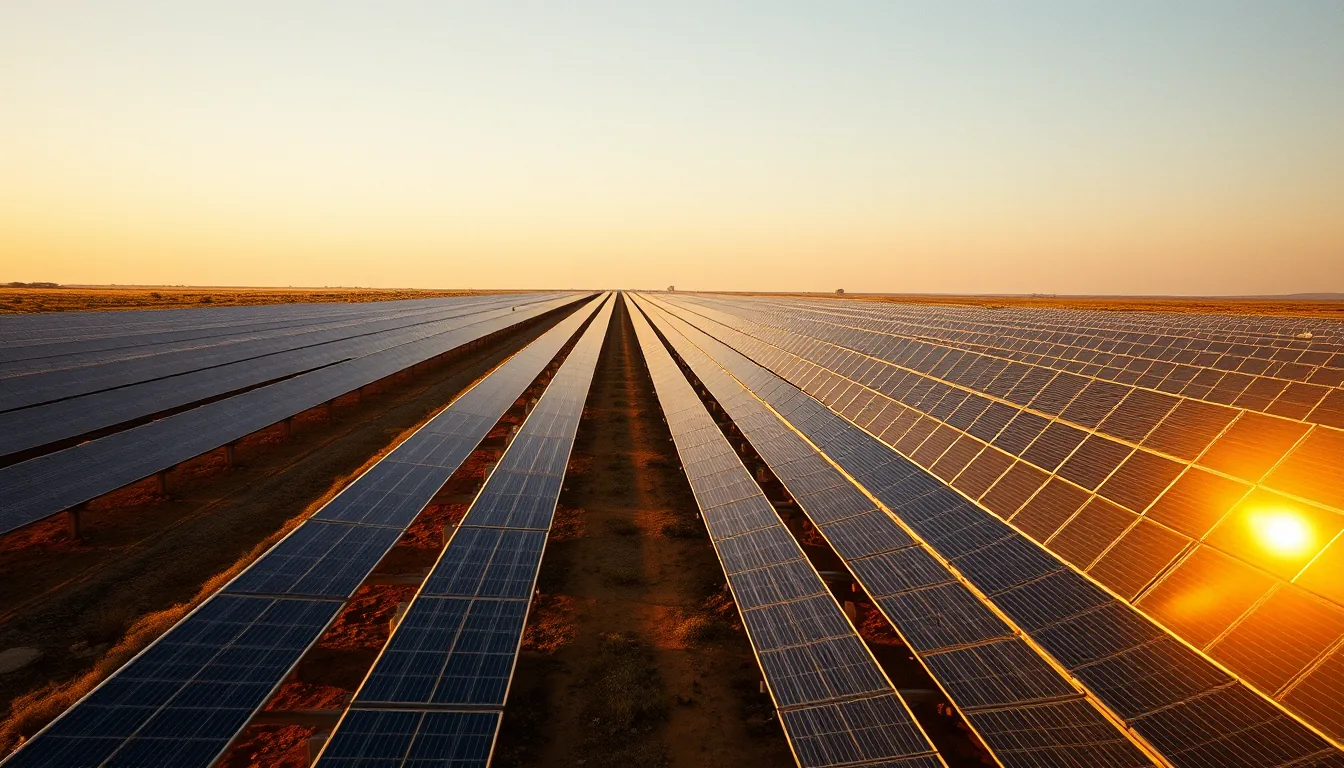
This brings us to the other half of the equation: power. You cannot have a compute-first scientific era if you are relying on a crumbling, fossil-fuel-dependent grid. The push for solar in Kenya isn’t just a nice story about sustainability or local economics; it is a prerequisite for the kind of infrastructure needed to support the next century of discovery.
If we want to move the needle on things like dark matter or protein folding, we need power that is both cheap and scalable. The traditional model of centralized power plants is too slow and too rigid. Kenya’s move toward solar is a blueprint for how the global south can leapfrog the “coal-and-smoke” phase of industrialization and go straight to the high-energy density needed for modern tech.
It’s a bit like the mobile phone revolution in Africa—skipping landlines entirely to jump straight to 5G. Why build a massive, centralized power grid when you can distribute the generation? For the developers and researchers in the region, this means the difference between running a script on a laptop and running a distributed training job across a local cluster without the lights flickering every time the wind blows.
The physics community needs to stop pretending that the “theory” is the hard part. The hard part is the energy and the silicon. We have the math; we just don’t have the power.
By Q1 2027, we will see the first peer-reviewed paper where an AI-driven simulation identifies a dark matter candidate that humans completely overlooked because it didn’t fit the WIMP profile. Until then, we’re just guessing with better tools.