
A million-token context window in an open-weight model is mostly theater unless you have a server rack in your basement. MiniMax is pushing the boundaries of what they call “open,” but the gap between a theoretical context limit and the actual VRAM required to utilize it is where the reality check happens.
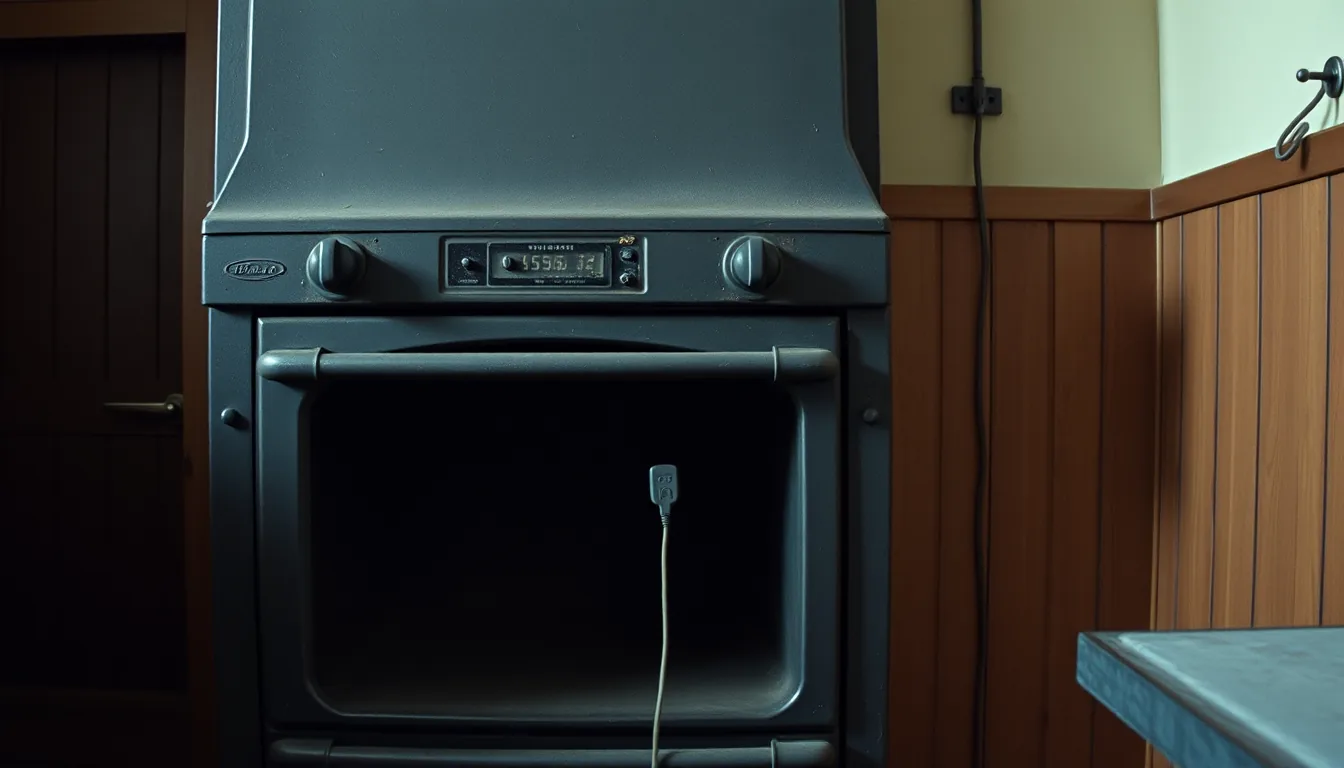
The hardware reality is the first wall you hit. Even with Grouped Query Attention (GQA) and aggressive quantization, a million tokens of KV cache is a memory nightmare. Who is actually going to feed a million tokens into a local instance without hitting a memory wall? If you are running this on a 3090 or 4090, you are not going to see that full window without some seriously heavy lifting in vLLM or llama.cpp. For most of us, the “comfortable spec” remains far below the million-mark, and the model will likely fall apart or crawl to a halt once the cache exceeds the available VRAM. It is like buying a professional-grade industrial oven for a kitchen that only has one electrical outlet (and a very old fuse box). You have the capacity, but you lack the power to actually turn it on. Even on a Mac M3 Ultra with 192GB of unified memory, the latency on a million-token prompt will be enough to let you go make a sandwich and check your mail.
When we look at the open-weights pecking order, the target is clearly the Llama 3.1 and Qwen2.5 series. While Llama 3.1 gave us a respectable 128k window, MiniMax M3 is trying to leapfrog everyone by an order of magnitude. But the real question isn’t about the window size—it’s about the retrieval quality. We have seen “massive context” claims before that fail the Needle In A Haystack test the moment you move past 100k tokens. If M3 can actually maintain coding precision across a million tokens, it beats Qwen2.5-Coder for massive repo analysis. If it can’t, then the million-token figure is just a vanity metric for the slide deck. We’ve seen this pattern before with early long-context releases where the model technically “accepts” the tokens but effectively forgets everything that happened in the first 20% of the prompt.
Then there is the license. We need to be clear: “open-weight” is not the same as “open-source.” Many of these releases come with custom restrictive licenses that allow you to tinker but stop you from actually building a commercial product without paying a toll. If this isn’t Apache 2.0 or MIT, it is just a gated demo that you happen to be allowed to run on your own GPUs (or at least a very expensive cluster of H100s). The dev community has a short memory for these “community licenses” that turn into legal traps once a project gains traction. Or maybe not—maybe the legal teams have finally figured out a way to make these licenses palatable. Either way, the lack of a standard permissive license is a red flag for anyone planning to bake this into a production pipeline.
The utility of native multimodality is the wild card here. If the model can process a million tokens of mixed text and image data without hallucinating every third sentence, it changes how we handle local documentation. However, the friction of deployment—likely needing EXL2 or GGUF quants to fit into consumer memory—means the average hobbyist will be waiting on the quantization community to make this usable. Most of us will be relying on Ollama or LM Studio to wrap this in a way that doesn’t require a PhD in CUDA kernels. By the end of Q3, we will see whether the community can actually implement a functional KV cache compression for M3 that keeps the 1M window stable on 80GB cards. Until then, the million-token window is a luxury for the few.
It is a flashy piece of engineering that will remain a luxury for the few until the memory overhead is solved.