
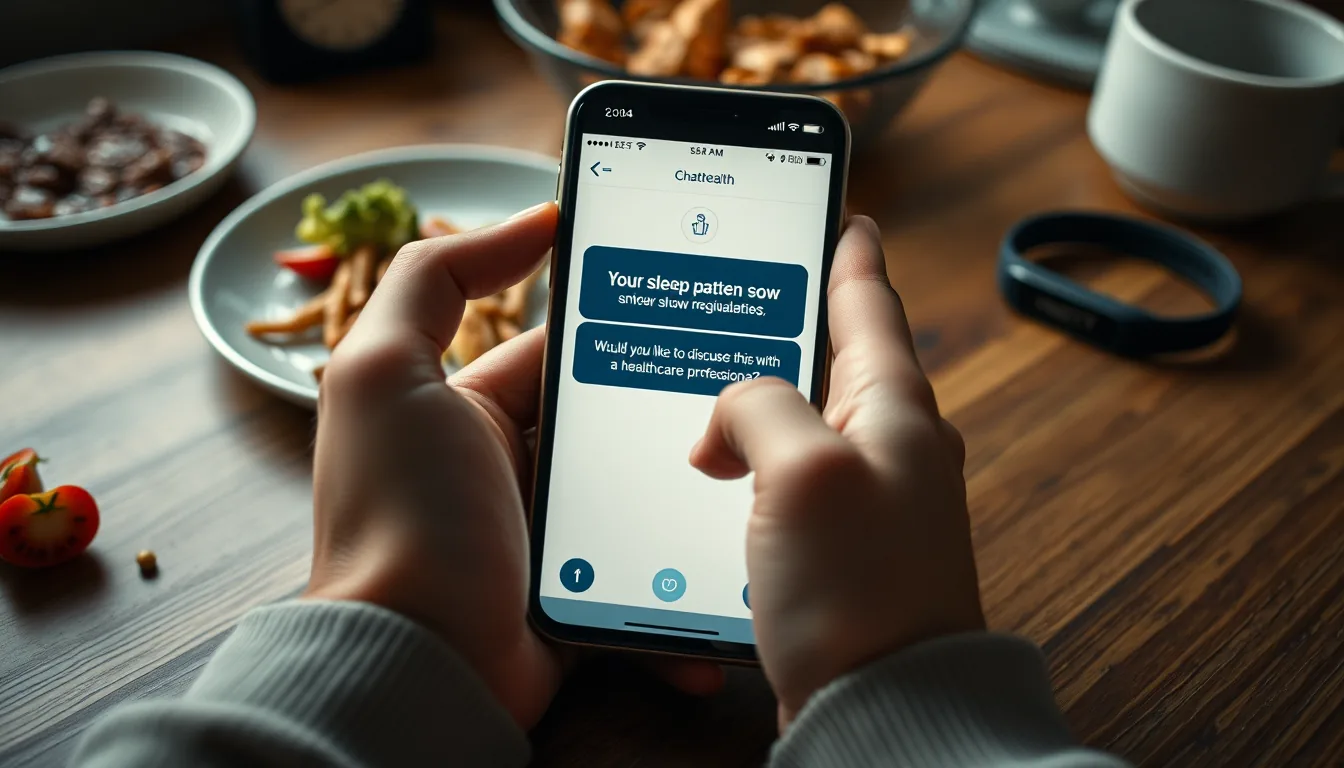
“Users can also integrate their personal data from services like Apple Health, Function, and MyFitnessPal.” It is a bold move to ask people to hand over their biological telemetry to a company that has spent the last few years in a legal blender over how it handles training data. OpenAI isn’t just offering a feature here; they are asking for a permanent window into your heart rate, sleep cycles, and caloric intake.
Calling this “ChatGPT Health” is a clever bit of branding, but let’s be clear about what is actually happening under the hood. This isn’t a new medical model trained on a pristine, curated set of clinical trials. It is a RAG (Retrieval-Augmented Generation) system that plugs your personal CSVs and API feeds into a general-purpose LLM. Is this actually a health tool, or just a fancy way to let a chatbot tell you that you didn’t sleep enough last Tuesday? (I’m guessing the latter). It is essentially like giving your medical records to a very confident intern who has read every textbook in the library but has never actually touched a patient. The intern can quote the literature perfectly, but they might still miss the fact that your specific combination of symptoms is a red flag because they’re too busy hallucinating a correlation between your step count and your mood.
Then there is the trust gap. According to TechCrunch, the integration is designed to make health tracking “seamless,” but seamlessness is usually a euphemism for “we’ve made it very easy for you to forget where your data is going.” We’ve seen this play before in the wearable market. Once the data is in the ecosystem, it rarely stays in a silo. While OpenAI will point to privacy controls, the friction isn’t just legal—it’s technical. Anyone who has tried to build against the fragmented mess of health APIs knows that data normalization is a nightmare. Expect the first few months of this rollout to be plagued by weird sync errors and mismatched units of measurement that could lead to some genuinely confusing AI advice. (I suspect the “seamless” experience will actually be quite glitchy).
Strategically, this is a blatant land grab for the most intimate data possible. By moving from a general assistant to a verticalized health companion, OpenAI is trying to move from “useful tool” to “essential utility.” If the bot knows your glucose levels and your medication schedule, you aren’t just using a chatbot anymore; you’re relying on a digital prosthetic. It’s like replacing a family doctor with a personal trainer who has a PhD in statistics but no bedside manner. Once you outsource your health intuition to a prompt, you stop questioning the output and start trusting the pattern. It’s a high-stakes bet on the idea that users value convenience more than the theoretical risk of their biometric data being used to fine-tune a future version of the model.
We should also consider the monetization angle. OpenAI cannot sustain the compute costs of these specialized integrations forever on a flat monthly fee, especially if they have to implement higher-precision verification for medical data. By Q4 2026, OpenAI will introduce a “Premium Health” tier that costs an extra $20 a month for “certified” accuracy or real-time monitoring. They are building the habit now so that the price hike feels like a fair trade for peace of mind later. It is the classic SaaS playbook: make it free and integrated, then charge for the “professional” version once the user is too dependent to leave.
The move is a calculated risk that trades long-term trust for immediate data acquisition.