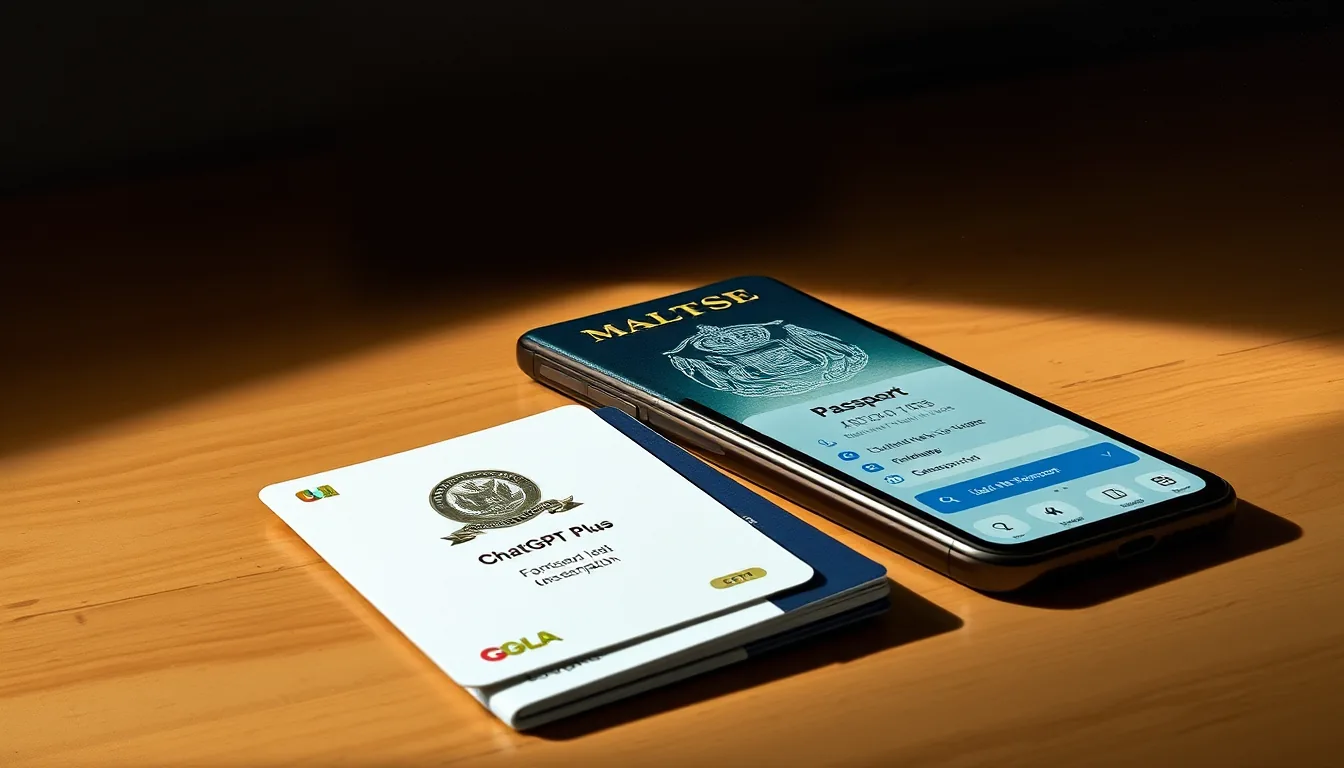
Giving a whole country free ChatGPT Plus is a blatant data grab.
It sounds like a philanthropic gesture from the heights of San Francisco, but let’s be real: Sam Altman doesn’t just give away high-tier subscriptions to an entire population for the sake of “digital literacy.” The partnership between OpenAI and the Government of Malta effectively turns a sovereign nation into a controlled lab experiment. By providing Plus accounts to every citizen, OpenAI isn’t donating software; they are purchasing a high-density, real-world dataset of how a specific demographic interacts with LLMs when the financial barrier is removed.
Who actually thinks this is about helping Maltese citizens write better emails?
The logistics are already a nightmare. Verifying citizenship for thousands of people to ensure they get a Plus account without creating a million ghost accounts is a friction point the press release ignores. (Assuming the government can even figure out the distribution). But the real prize for OpenAI is the telemetry. They get to see how a concentrated population uses custom GPTs, how they utilize the Advanced Voice Mode in a specific linguistic environment, and how they integrate these tools into their daily civic life. It is the ultimate A/B test.
They are essentially treating the entire island as a “canary in the coal mine” for future government integrations. If they can successfully embed their ecosystem into the administrative and personal lives of an EU member state, the blueprint for scaling this to other small nations—or larger ones—is already written.
This is where the deal turns sour for the citizens. When a government partners with a single provider to provide a primary utility, it creates a dependency that is almost impossible to break. It is like a supermarket giving away free samples of a new snack; it feels like a win until you realize you’ve stopped buying anything else and the store now knows exactly what your taste buds prefer.
By making ChatGPT Plus the default “AI assistant” for the nation, Malta is effectively outsourcing the cognitive infrastructure of its citizenry to a private company with an opaque set of guardrails. What happens when the subscription period ends? Or more likely, what happens when the “free” period transitions into a government-mandated fee? The lock-in is total. Once a population has built their workflows, their business processes, and their educational habits around a specific proprietary model, switching costs become prohibitive.
There is also the glaring tension with the EU AI Act. Malta is an EU member, yet they are handing over the keys to their population’s data to a US-based company that has a checkered history with transparency. The irony is thick. We are seeing a collision between strict European privacy regulations and the aggressive expansionism of Silicon Valley, and the Maltese citizens are the ones caught in the middle.
It is a trap.
The fallout won’t be immediate, but the friction will mount as the data starts moving across borders. By Q4, we will see the first major legal challenge from EU privacy regulators regarding the specific telemetry being pulled from this Maltese cohort. The regulators will likely find that the “consent” given by citizens in exchange for a free subscription doesn’t actually cover the level of behavioral profiling OpenAI requires to make these models better.
The move is strategically brilliant for OpenAI and strategically reckless for Malta. They’ve traded their digital sovereignty for a few months of fancy prompts and faster response times. It’s a classic case of the “free” product being the most expensive one in the room.