
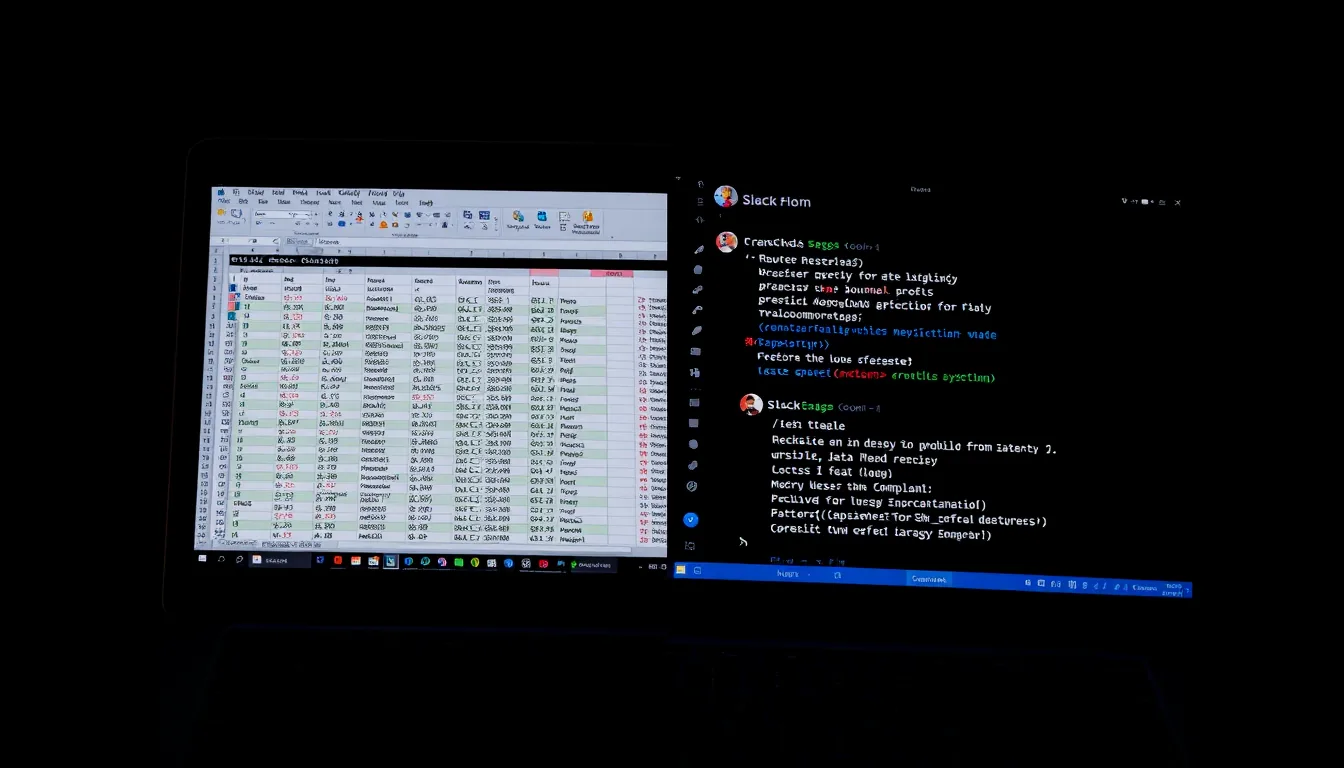
It is 3:14 AM. You are staring at a spreadsheet that needs to be synced with a Jira board and a Slack channel, and you are wondering why you are still doing this manually in 2025. You have probably tried writing a Python script to handle it, but the API limits are a joke and the authentication is a nightmare. You just want something to “do the thing” across your desktop without having to write a custom wrapper for every single legacy app in your stack.
Perplexity is betting that their “Personal Computer” tool—which previously lived only on Mac—can solve this by turning Windows into an agentic playground. The idea is a “general-purpose digital worker” that can see your screen and interact with your apps. According to The Verge, this expansion means the most popular OS now has a layer of AI that doesn’t just suggest text, but actually moves the mouse.
The ambition here is high, but the technical reality of Windows is a minefield. For those of us who have spent any time in the weeds of automation, we know that UI-based agents are fundamentally fragile. One unexpected Windows Update that shifts a button three pixels to the left, or a random pop-up from a printer driver, and the agent is suddenly clicking on a void.
Why pretend that a simulated mouse click is the peak of productivity? It is an admission of defeat. It is essentially an admission that the APIs of our most used software are so broken or restrictive that the only way to automate them is to mimic a human with a mouse. It is like trying to train a golden retriever to operate a switchboard—it might work a few times, and it looks impressive when it does, but you wouldn’t trust it with your production environment.
(If you can ignore the latency) the promise is still seductive. The ability to say “find the discrepancy between these two PDFs and email the manager” without manually opening four windows is the goal. But the overhead is real. Between the screen-scraping latency and the token cost of sending high-res screenshots to a vision model, this is going to be a slow process.
It’s a fragile layer over a messy OS.
There is a distinct difference between a cloud-based wrapper and a locally run AI system, and Perplexity is trying to bridge that gap. By allowing the system to operate locally on Windows, they are attempting to bypass some of the privacy concerns that usually make IT departments scream when you mention “AI agent with screen access.”
However, the “local” part is often a marketing sleight of hand. Unless you are running a beefy local LLM (provided you have the VRAM to spare), the intelligence is still happening in the cloud. You are just running the controller locally. This creates a bottleneck where the agent’s “eyes” are local, but its “brain” is twenty milliseconds away in a data center.
This is a familiar movie. Every time a third-party tool manages to crack the OS shell, the OS vendor eventually decides they want that slice of the pie. (I bet Microsoft ships a native equivalent that makes this third-party wrapper redundant by Q4).
The real question is whether the goal is an agent that “works” our computer for us, or if the real need is software that isn’t a walled garden of proprietary APIs. Perplexity is treating the symptom, not the disease. Until there is a standardized way for agents to communicate with apps without relying on visual coordinates, this is just putting a fresh coat of paint on a crumbling building.