
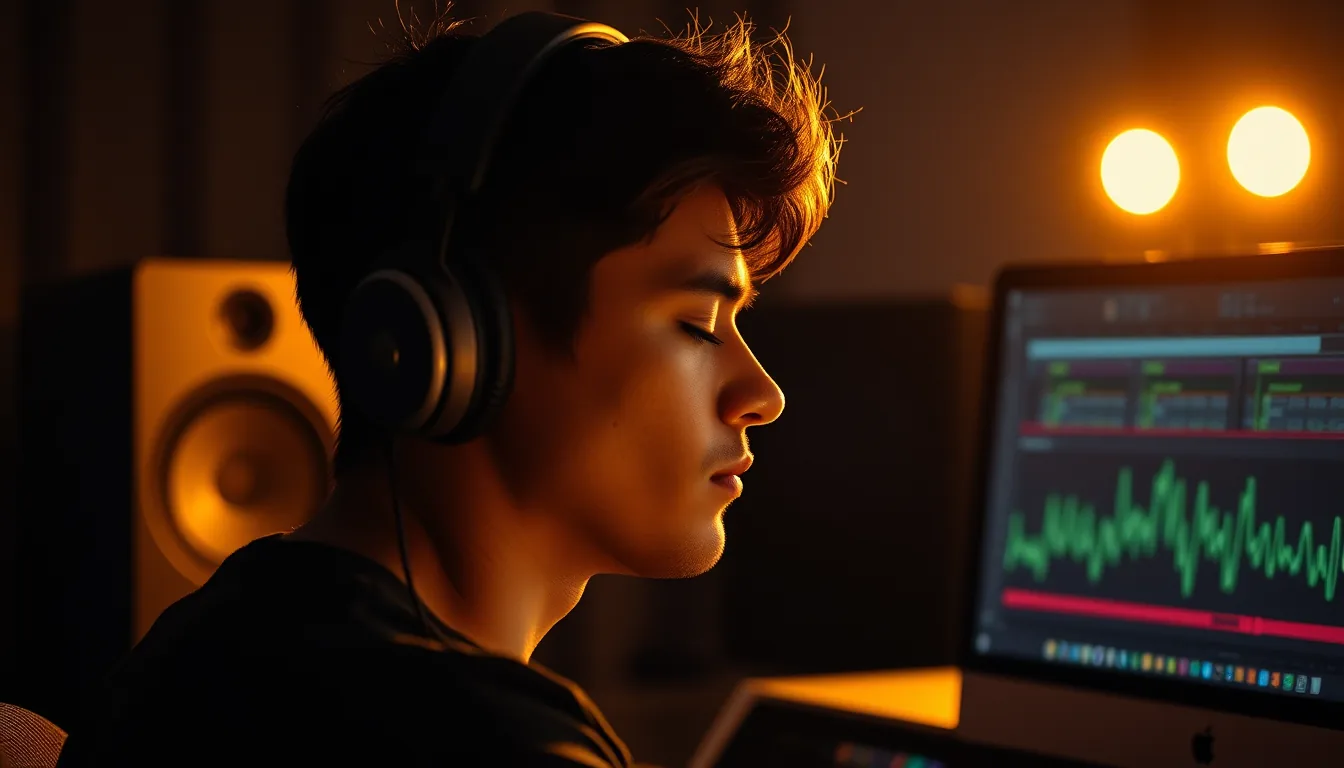
It is 3:14 AM. A freelance game developer is staring at a blank timeline in Ableton, needing a “distant sirens in a rainy city” sound effect. He doesn’t want to pay for another subscription or spend forty minutes hunting through a legacy sample pack. He just wants to type a prompt, hit enter, and get a usable .wav file without his fans sounding like a jet engine taking off.
Stability AI just handed him the keys. The release of Stable Audio 3 is a rare moment of the company actually sticking to the “open” part of its identity. Instead of another gated API that charges by the second, we get open weights for the Small and Medium variants of their latent diffusion family.
For the local-inference crowd, the “open weights” tag is usually a gamble. Half the time it means “open weights, but you need a cluster of H100s to load the tensors.” Not here. This is built for the people who actually build things.
The Medium model is the sweet spot. It fits on consumer GPUs with 8 GB of VRAM. That is a critical line in the sand. It means anyone with a 3060 or 4060 can actually run this without swapping to system RAM and watching their generation speed drop to a crawl. On a 3090 or 4090, you can likely keep the model resident in memory and generate clips almost instantaneously.
If you are on a Mac, the Small variant is the target. The fact that it runs on a MacBook Pro M4 CPU is a nice nod to the MLX community, though CPU-based diffusion is usually a test of patience. Does anyone actually enjoy waiting three minutes for a ten-second clip? Probably not. But for those who don’t have a dedicated GPU, it’s the difference between “impossible” and “eventually.”
The real friction, as always, is the license. Stability has a habit of moving the goalposts on their licensing agreements. While they call these open weights, the fine print often distinguishes between “community use” and “commercial enterprise.” If you are a hobbyist, you are fine. If you are trying to build a commercial audio workstation plugin, you might find yourself in a legal gray area (probably a nightmare for copyright lawyers).
The VRAM floor is the only metric that actually matters here.
When you look at the open-weights pecking order, Stable Audio 3 is stepping into a space previously dominated by AudioLDM 2 and various fine-tunes of older diffusion models. Most of those felt like academic exercises—impressive in a paper, frustrating in a production pipeline. Stable Audio 3 feels more like a tool.
It is like the difference between hiring a session musician and just sampling a record from a dusty crate. One is a process; the other is a result. By focusing on latent diffusion, Stability is cutting out the computational fat, allowing for faster iteration. We aren’t just talking about generating a loop; we’re talking about editing audio in a way that doesn’t require a PhD in signal processing.
Of course, the “Small” model will inevitably trade off some of the high-frequency fidelity. You’ll likely hear that characteristic “diffusion blur” in the upper registers—a sort of digital smudge that makes cymbals sound like static. But for sound effects and atmospheric textures, it is a non-issue.
I suspect we will see the first high-quality GGUF-style quantizations for the Medium model appearing on Hugging Face by Q4. Once the quantization community gets their hands on the weights, that 8 GB VRAM requirement will likely drop to 4 GB or 5 GB, making this viable for even the most budget-constrained rigs.
Whether this saves Stability AI’s reputation is a different story. But for the dev running a 4090 in a dark room at 3 AM, it’s a win.