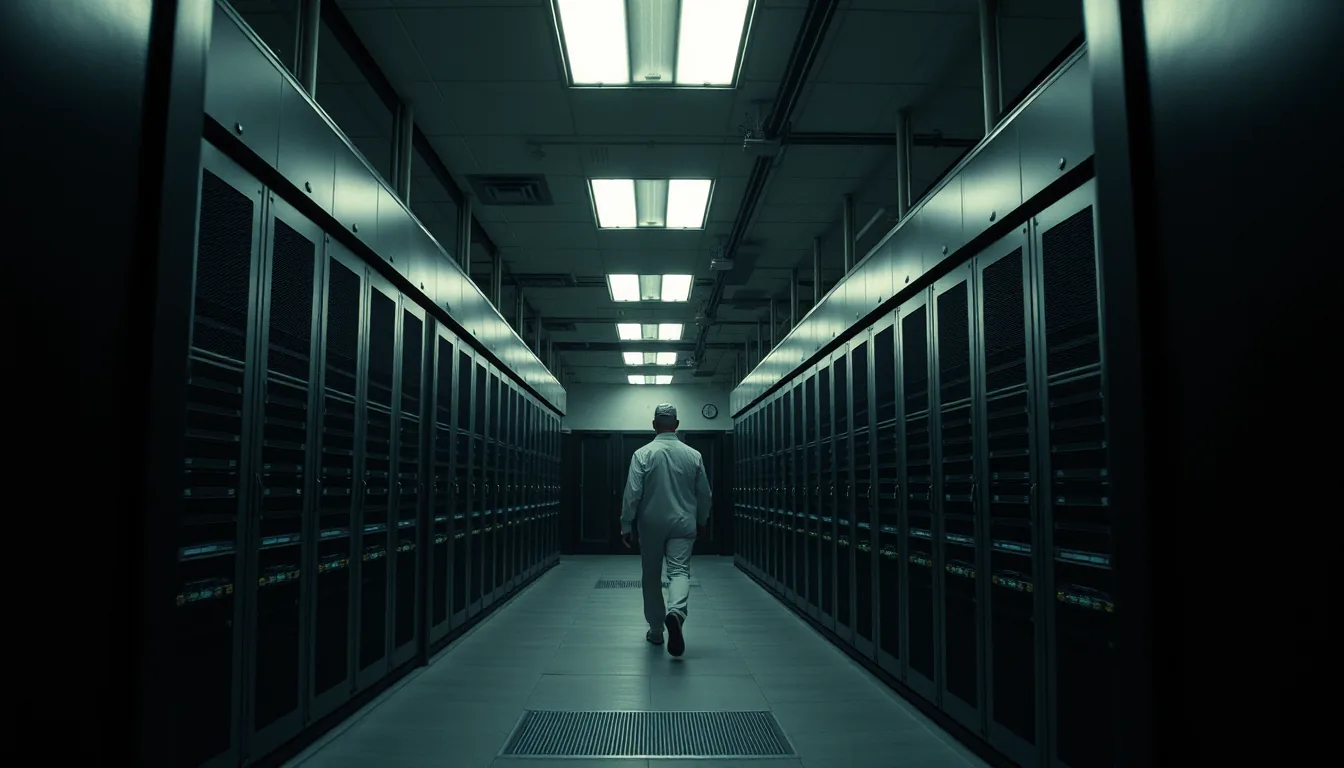

“The utility company has effectively prioritized the cooling needs of H100 clusters over the heating needs of human beings.” It’s the kind of cold, hard logic that makes perfect sense on a spreadsheet and looks like a dystopian nightmare in a press release. We’ve spent the last few years treating the “cloud” as some ethereal, weightless dimension, but this story reminds us that the cloud is actually just a collection of very hot warehouses that eat electricity like a starving animal.
The physical reality of the AI surge is finally colliding with the physical reality of the power grid. Everyone in the dev community is obsessed with context windows, quantization, and the latest benchmarks, but almost nobody is talking about the copper and the transformers. The friction here isn’t a software bug or a latency issue; it’s a hard limit on how many megawatts a regional grid can pump out before things start popping. As detailed in the report from ArsTechnica AI, we are seeing the first real instance of “compute colonialism,” where the energy needs of a few GPU clusters outweigh the basic survival needs of an entire town. It’s a stark reminder that the infrastructure we rely on was built for a world where the primary load was washing machines and air conditioners, not ten thousand H100s running at full tilt.
It is a brutal trade-off. The power dynamic is similar to a luxury hotel stealing water from a local village to keep the swimming pool blue while the villagers’ wells run dry. The data centers are the new industrial plants, but instead of producing steel or chemicals, they are producing tokens. The problem is that these tokens are being generated for a handful of companies while the externalities—the brownouts, the grid instability, the political fallout—are being socialized and pushed onto people who probably can’t even get an LLM to write a decent email. We’ve reached a point where the “intelligence” being generated is literally stealing the lights from the people living next door to the server racks.
We need to stop pretending that scaling laws are an abstract mathematical concept. Scaling laws have a physical footprint. The industry is treating the power grid as an infinite resource, which is a delusion (or maybe I’m just being cynical). Do we really think the general public will tolerate their lights flickering in the middle of winter so some VC-funded lab can train a model that can write slightly better poetry? The arrogance of assuming that the pursuit of AGI is a higher priority than electricity for residential heating is a mistake that will lead to massive regulatory blowback. The disconnect between the software engineers in San Francisco and the electrical engineers in the field has never been wider, and the gap is being filled with resentment.
This isn’t just a local dispute; it’s a preview of the next few years of infrastructure warfare. By Q4 2026, we’ll see the first major legislative “compute tax” specifically tied to regional grid stability in the US West. The era of building massive clusters wherever the land is cheap and the regulations are loose is ending because the physics of the grid simply won’t allow it. We are entering a period of forced rationing. The grid cannot sustain the current trajectory of growth without an astronomical increase in local power generation that the current timeline simply doesn’t allow for, regardless of how many “green energy” promises are made in corporate sustainability reports.
Compute is not a virtual resource, and the bill is finally coming due.