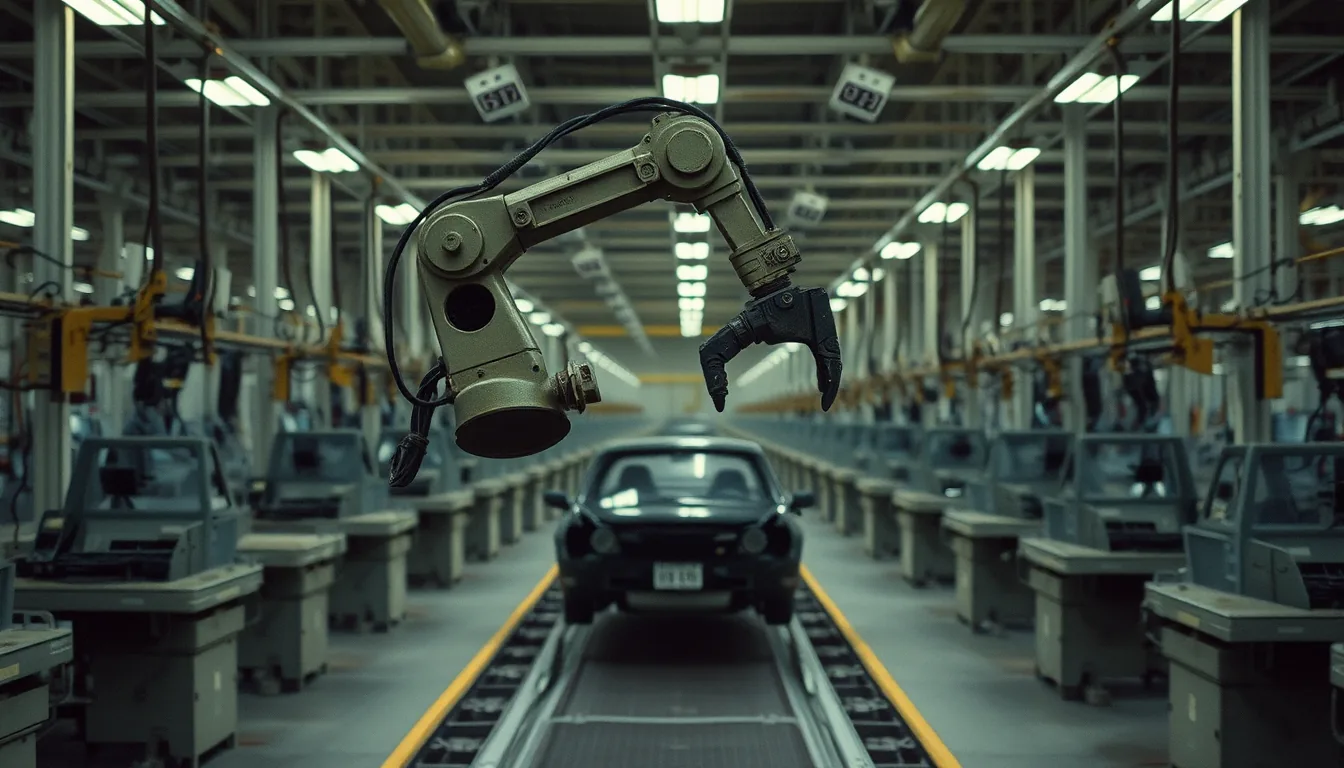

Talking about “al dente” pasta is a dangerous game. To some, it means a slight resistance to the tooth; to others, it’s a specific timing on a stopwatch; to a handful of purists, any deviation from a very narrow window is a culinary crime. Everyone uses the same phrase, but they are arguing about three different things. The current state of AI terminology is exactly the same, only with more venture capital and fewer carbs.
Calling a model’s failure a “hallucination” is a convenient lie. It frames a probabilistic failure as a psychological event, which makes the AI sound like a moody artist rather than a matrix multiplication engine that hit a low-probability token. When a model tells you that the Golden Gate Bridge was built by squirrels, it isn’t “seeing” things that aren’t there—it is simply predicting the next most likely word based on a flawed weight distribution or a temperature setting that is far too high (and probably a bit of vanity in the RLHF layer).
The industry loves the term because it sounds human. It suggests that the AI is almost conscious, just prone to the occasional daydream. In reality, it’s just a failure of grounding. Why are we pretending this is a biological failure? It is a statistical one. By codifying “hallucination” in guides like the one from TechCrunch AI, we are just cementing a poetic euphemism as a technical fact.
The terminology is broken.
For the person writing the code, a glossary of “common terms” is mostly useless. Developers don’t need a definition of “prompt engineering” that reads like a marketing brochure; they need to know why their context window is leaking or why the latency on a specific endpoint is spiking. Most of these glossaries are written for the people who nod along in board meetings—the ones who want to sound like they understand the “magic” without having to touch a Python script.
There is a real danger when the “common” definition of a term starts to override the technical one. When the marketing layer of the industry defines the language, the actual engineering starts to look like a bad translation of a foreign film where the plot is vaguely understood but the nuance is gone. We’ve seen this before with “Deep Learning,” which is now often used as a synonym for “any software that uses a neural network,” regardless of the architecture.
If you are already in the weeds with VRAM limits and quantization errors, these definitions are just noise. They describe the symptoms of the technology, not the mechanics.
Right now, every lab is inventing its own dialect to make its specific approach sound unique. It’s a branding exercise disguised as a technical evolution. They don’t want a standardized lexicon because ambiguity allows them to move the goalposts on what “intelligence” or “reasoning” actually means. If you can’t define the metric, you can’t fail the test.
However, the friction is becoming too much. You can’t build a stable ecosystem when the word “agent” means “a script that calls an API” to one person and “an autonomous entity with a long-term memory” to another. The cognitive load of translating between “marketing-speak” and “dev-speak” is starting to outweigh the benefits of the ambiguity.
By Q4, the industry will pivot away from “hallucination” toward “stochastic drift” or “confabulation” in official technical documentation to distance themselves from the biological metaphor. It won’t happen because they care about linguistic precision—it will happen because the current terms have become memes, and memes are bad for enterprise sales. Until then, we are stuck in the “al dente” phase, where everyone is talking, but nobody is agreeing on how the pasta is cooked.