

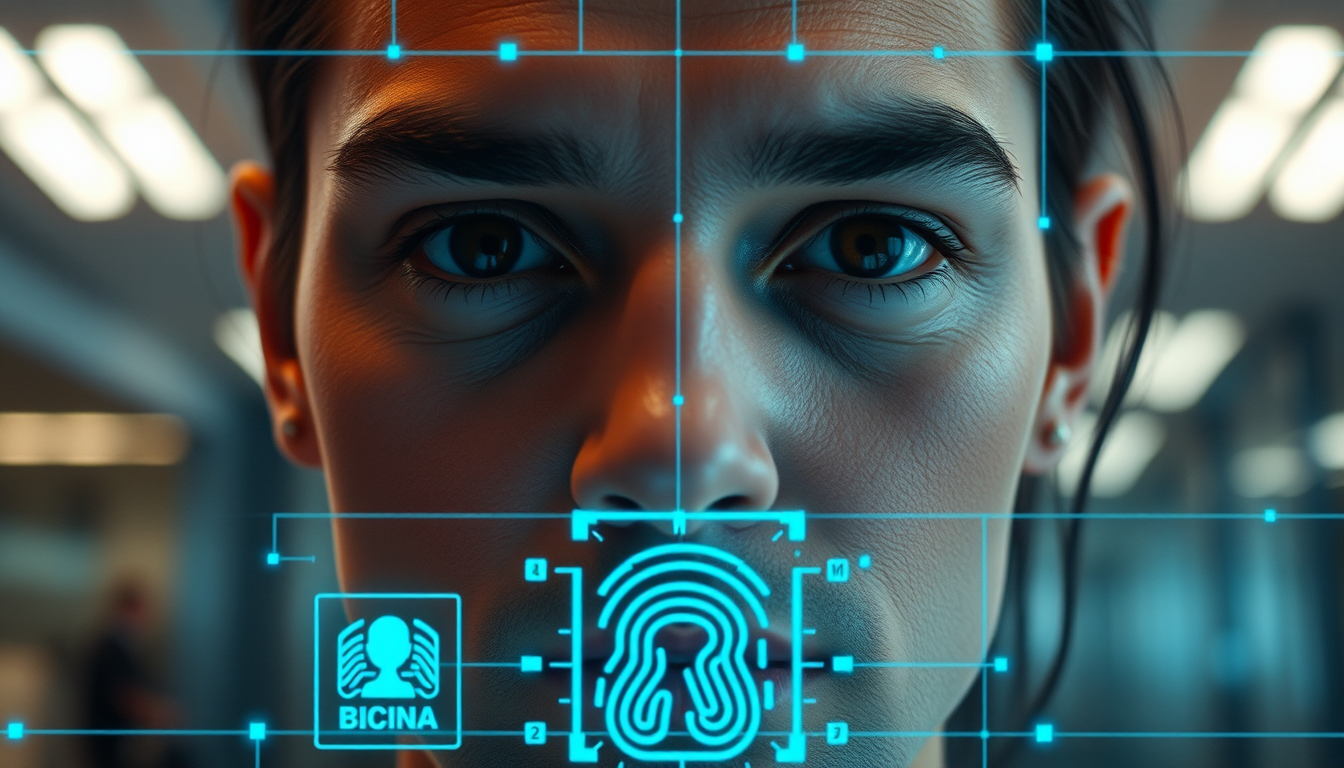
Imagine a poker player who thinks they can read your entire hand just because you blinked twice or shifted your weight in your chair. They aren’t reading your cards; they are projecting a narrative onto a random physical twitch and betting their entire stack on it. That is exactly how “emotion AI” works, except the stakes aren’t poker chips—they are your job security and your mental health.
A recent feature in The Atlantic details how software claiming to decode human emotion is quietly slipping into the corporate world. These tools analyze facial expressions, tone of voice, and keystroke patterns to tell managers whether an employee is “engaged,” “frustrated,” or “unproductive.” The problem is that the underlying science is a mess. The assumption is that a specific facial muscle movement equals a specific internal emotion, regardless of culture, personality, or the fact that some of us just have a naturally resting face that looks like we are smelling a rotten egg.
Who actually believes a camera can tell if you’re “disengaged” or just tired from a three-hour Zoom call? (It is essentially a digital mood ring for HR). For anyone who has spent five minutes looking at how computer vision actually works, the gap between “pixel change in the brow region” and “employee is feeling dissatisfied with their salary” is a canyon that no amount of training data can bridge.
It is a fraud.
The facial expression fallacy
The danger here isn’t just that the tech is wrong—it’s that managers believe it is right. When a piece of software gives a “score” to a human being, it gains a veneer of objectivity. A manager who doesn’t know how to lead will lean on a dashboard because it feels more scientific than actually talking to their staff. We’ve seen this before with the obsession over “productivity scores” and keystroke logging, but this is worse because it attempts to quantify the subconscious.
If you’ve ever worked in a corporate environment, you know the performance of “professionalism.” We spend half our day pretending to be excited about quarterly goals while our souls slowly exit our bodies. Emotion AI penalizes people who are bad at this specific type of acting. It creates a perverse incentive to maintain a permanent, frozen mask of “engagement” just to satisfy an algorithm.
From a technical standpoint, these systems are often just wrappers around basic sentiment analysis or outdated affective computing models that ignore context entirely. They treat the human face like a static map rather than a dynamic, idiosyncratic organ. The friction is already there—the latency of these tools is often high, and the false positive rate is likely astronomical—but the people buying the software aren’t the ones who have to live under the camera.
This isn’t just a privacy issue; it’s a gaslighting engine. If the AI tells your boss you look “unhappy” during a meeting, and you insist you’re fine, the boss now has a “data-driven” reason to doubt your honesty. You are no longer arguing against an opinion, but against a “metric.”
The industry is currently operating in a regulatory blind spot, but that won’t last. The gap between what these companies claim and what the science supports is too wide to ignore. By the end of Q4, we will see the first major wrongful termination lawsuit in the US where the primary evidence for the firing was a “low engagement score” from an emotion AI tool.
When that happens, the companies selling this stuff will claim the tool was “only meant to be an aid for managers,” shifting the blame to the user. But the product was sold as a window into the human mind. It turns out the window is just a mirror reflecting the biases of the people who programmed it.












Leave a Reply