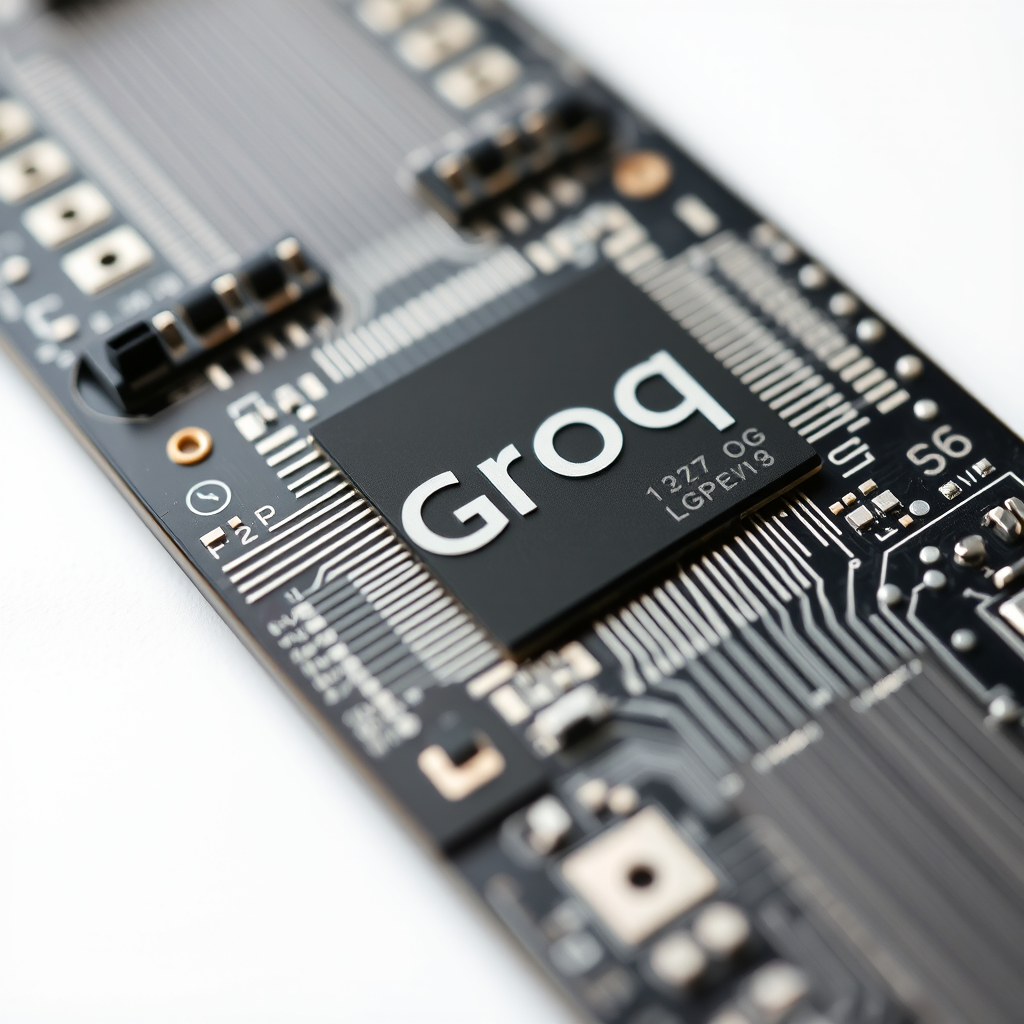
Groq has set a new speed record for AI inference, and it’s the first crack in NVIDIA’s monopoly. Not because Groq is better than NVIDIA. Because Groq is different, and sometimes “different” is exactly what the market needs.
Groq’s LPU (tensor Processing unit) can process large language models at speeds comparable to — or occasionally faster than — NVIDIA GPUs, and it does it using a different architectural approach. The implications for AI hardware diversity are substantial.
Why Groq Matters for NVIDIA Monopoly
NVIDIA has been the undisputed leader in AI compute for over a decade. Every GPU, every data center, every startup building AI — it’s all NVIDIA. Groq’s LPU proves there’s another way: a specialized processor designed specifically for inference, running at speeds that challenge what NVIDIA can do at a fraction of the cost.
The Speed Record: Why It’s Significant
Groq’s LPU processed a standard benchmark faster than any GPU competitor. That means for companies that need high-speed inference (real-time language models, voice assistants, search), Groq offers a direct alternative to NVIDIA’s ecosystem. The speed alone makes the comparison worthwhile.
“NVIDIA’s GPU dominance isn’t over. But the monopoly is. Groq proved there are viable alternatives for specific use cases.”
What This Means
- NVIDIA still has the CUDA ecosystem — a 15-year head start that’s extremely hard to beat
- Groq specializes in inference, not training — complementary, not a total replacement
- Other competitors are watching this closely as proof that the door is open
The NVIDIA monopoly isn’t breaking today. But Groq’s speed record is the proof-of-concept that alternatives exist. That changes the conversation in Silicon Valley.